



Tony Judt
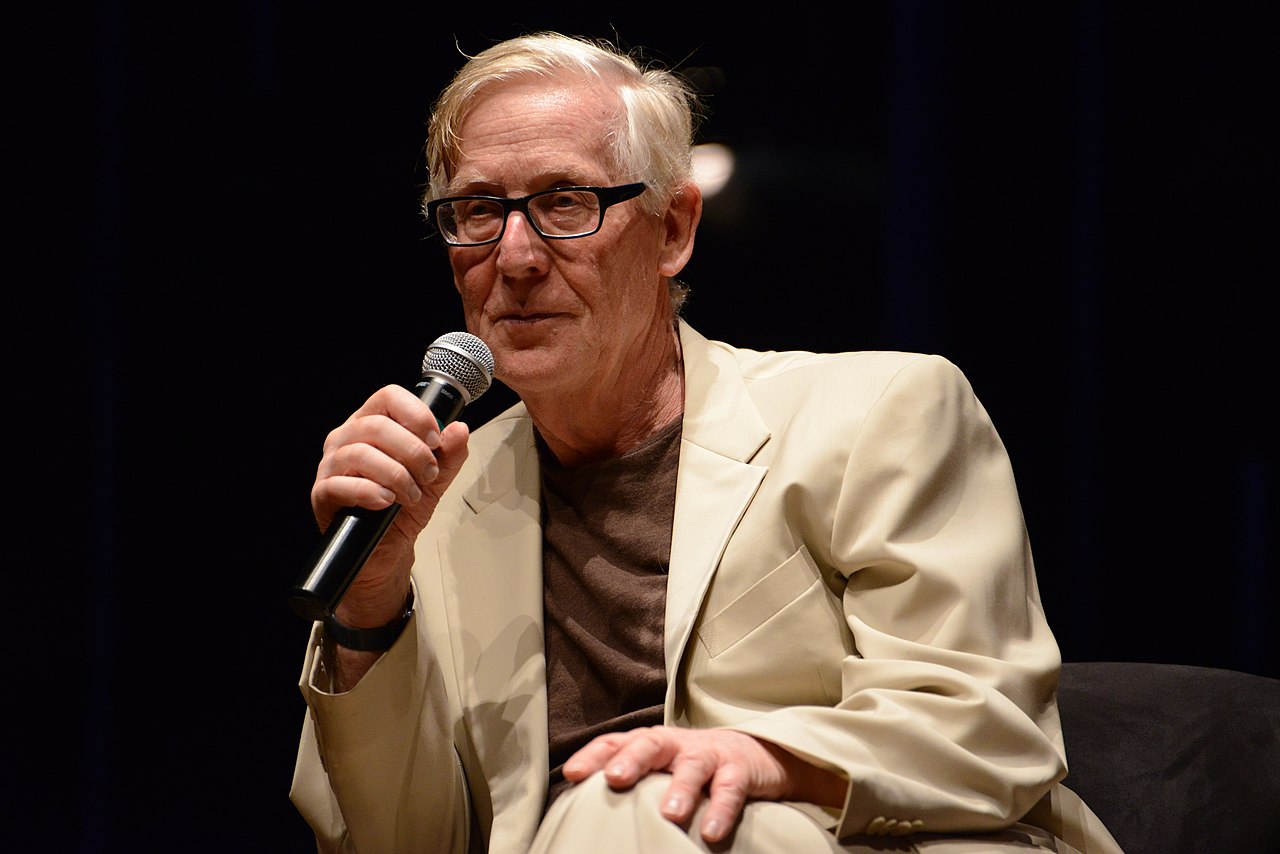
0British-American historian who wrote Postwar (2005), the definitive single-volume history of Europe from 1945 to 2005, covering both East and West in one integrated narrative drawn from research in six languages . As director of NYU's Remarque Institute, he embodied the French-style engaged intellectual, writing sharply polemical essays on Israel, American foreign policy, and the fate of social democracy. His final book, Ill Fares the Land (2010), written while paralyzed by ALS, argued that the postwar social democratic settlement—fairness over mere efficiency—offered the only viable alternative to market fundamentalism . He died in 2010 at age 62.


Key Insights
- ✦
What makes Postwar the definitive history of modern Europe?
Judt's 2005 masterwork was the first modern history to cover all of Europe—both East and West—in one integrated narrative, drawing on research in six languages and sweeping through thirty-four nations across sixty years of political and cultural change . Writing in the preface, Judt acknowledged that his 'proximity' to the events made 'dispassionate disengagement' difficult, and he offered an 'avowedly personal interpretation' rather than Olympian detachment . The book won the Council on Foreign Relations Arthur Ross Book Award, was a Pulitzer finalist, and was named one of the New York Times' 100 Best Books of the 21st Century .
- ✦
What was Judt's argument in Ill Fares the Land and why did he write it?
Written while Judt was paralyzed by ALS, Ill Fares the Land (2010) was a polemic against the erosion of social democracy over three decades of market fundamentalism . Judt argued that the postwar settlement—the guarantee of 'a basal level of security, stability and fairness'—had been dismantled, and that social democrats had lost the language to defend it. His response was to 'reinvigorate our political conversation' by recovering the social democratic alternative: 're-enshrining fairness over mere efficiency' . The book was his political testament, written as his body failed but his intellectual clarity remained intact.
- ✦
How did Judt's views on Israel evolve over his lifetime?
Judt was a passionate left-wing Zionist as a teenager, delivering a keynote address at a Zionist conference in Paris at age 16 . After volunteering as a translator for the IDF on the Golan Heights in 1967, he became disillusioned, later describing Israel as having 'turned from a sort of narrow-minded pioneer society into a rather smug, superior, conquering society' . By the 2000s, he was the most prominent American advocate of a binational one-state solution for Israel-Palestine . His evolution from Zionist activist to sharp critic of Israeli policy tracked his broader turn toward 'universalist social democracy' .
- ✦
What was Judt's institutional role at NYU and the Remarque Institute?
Judt joined New York University in 1987 and was the Erich Maria Remarque Professor of European Studies . In 1995 he founded and directed the Remarque Institute, 'dedicated to creating an ongoing conversation between Europe and the United States' . The Institute became a hub for transatlantic intellectual exchange, hosting conferences, fellows, and public events. Judt held the position until his death in 2010, continuing to lecture and write even after ALS left him paralyzed and dependent on mechanical breathing .
- ✦
How did Judt write The Memory Chalet after losing the ability to speak or write?
Diagnosed with ALS in 2008, Judt lost his ability to speak, write, and eventually move, but his mind remained fully intact . He developed a method he called 'the memory chalet'—constructing an elaborate mental architecture of rooms and corridors in which he stored memories, then dictating essays from this structure during sleepless nights . His wife and assistants transcribed the results. The essays, published as The Memory Chalet (2010), ranged from childhood train journeys to his disillusionment with Zionism, weaving personal recollection into twentieth-century history. His New York Review of Books essays from this period became celebrated for their clarity under extremity.
- ✦
What was Judt's relationship to the New Left and his critique of Marxism?
Judt began his intellectual life as a Marxist—his family were 'Jewish Marxist anti-Communists'—but shed his faith in Marxism and agrarian socialism early . He became a 'universalist social democrat' with 'a deep suspicion of left-wing ideologues' . His early work on French socialism and the French intellectuals' accommodation with Soviet tyranny—books like Past Imperfect and The Burden of Responsibility—examined how engaged intellectuals betrayed their principles . Judt's critique of Marxism was not that it was too radical but that it substituted ideological certainty for honest engagement with reality, a sin he saw repeated on the left in different forms.
- ✦
Why is Judt considered a 'public intellectual' rather than an academic historian?
Judt deliberately occupied the space between scholarship and political engagement, embodying the French model of the 'engaged intellectual' . He wrote frequently for The New York Review of Books, The Times Literary Supplement, and The New Republic, addressing contemporary politics with the same authority he brought to historical scholarship . His willingness to take unpopular positions—criticizing Israel, attacking American foreign policy, defending social democracy in an era of neoliberal consensus—made him a controversial but respected voice. As one obituary noted, he wrote 'according to his own maxim: a well-organized society is one in which we know the truth about ourselves collectively' .